Pirates
-
Crabclaw Peninsula
The mountainous topography of the region conspires with subtropical heat to create a great stretch of arid land at the “back” of what residents refer to as “the Claw.” Rains fall liberally from the end of winter months well into the summer, promoting an uncomfortably humid monsoon season on the windward “front” of the Claw.…

-
Frothing Blood Peaks
This region has a relatively cool climate, largely due to its high elevation. During the mild summer, the gradual warming of surface ice and snow encourages the growth of rosy algae and the tiny creatures that enjoy these as food, giving the mountains their famously macabre pink tinge. As I drew this map, it occurred…

-
The Boiling Isthmus
This region enjoys a mild climate with a substantial period of rain from the early winter through to the end of spring. Snows are occasional and limited to the higher altitudes that form the spine of the isthmus from east to west. The snowpack feeds three impressive rivers, two of which flow into the northern…

-
Crested Pheasant Caverns
The climate here is mild, with storms beginning at the end of summer and lasting throughout the fall. Each year the storms bring relief from drought. The northern peninsula is famous for its beautiful cavern networks. There are also abundant and diverse creatures of burden. There are three cultures here—Red, Blue, and Silver. Red are…

-
Valley of Lions
The climate of this region is hot and dry. Mountains obstruct the prevailing winds in such a way that much of the area is desert, though not inhospitable. Rains fall from late summer into the early winter. There are three cultures here—Gold, Red, and Blue. Gold and Red are both enduring, well-established peoples. Blue arrived…

-
Axehead Peninsula
This region has a mild climate. The rainy season that occurs during the summer, followed by a brief period of storms at the end of the fall. The deserts that separate the northern and southern ends of the peninsula are particularly inhospitable during the dry winters. There are three cultures here—the technologically advanced Blue peoples…

-
The Big and Little Horse Islands
The mild climate and native pastures have made these islands particularly hospitable to horses. The rainy season begins late in the summer, with increasing intensity until its culmination at the end of fall. Hurricanes are poetically compared to stampedes. Four horse-loving cultures prevail here, some of which experienced great turns of fortune when the last…

-
Shelter Island and Broad Glacier
This subarctic region is covered in ice much of the year. Snows begin late in the winter, giving way to rains in the early summer. Despite this precipitation, the dry air and strong winter winds have created an arid environment. There is one culture here, though memories of others remain. Shelter Island boasts a vibrant…

-
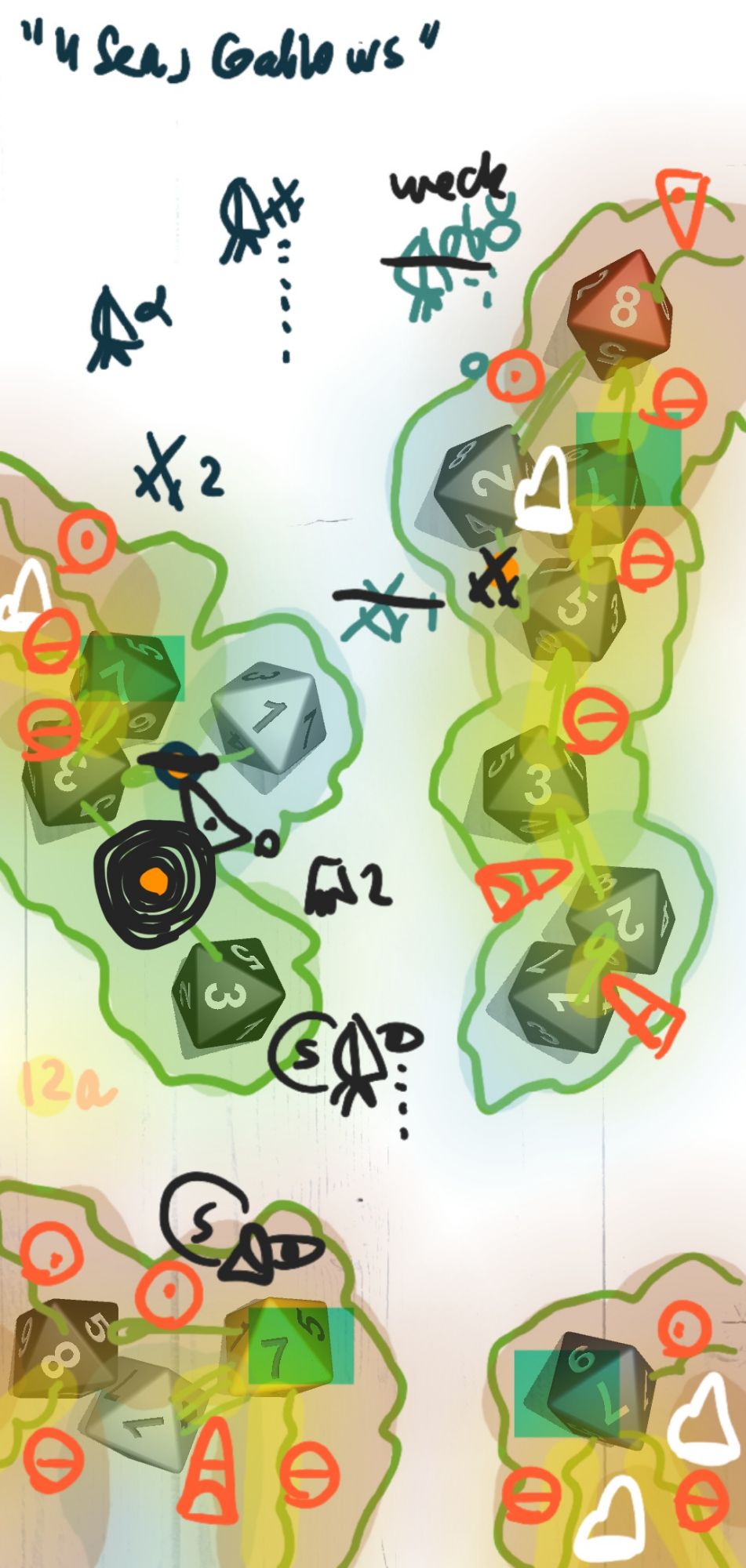
Four-seas Gallows
Although it rests at a temperate latitude, this region at the convergence of four seas is punishingly arid. Cold, still winters bring clay-cracking droughts that are timidly wetted by early spring rains. Much of the area is uninhabitable, but not all. On the east-most point of the western peninsula rests the grand Silver City. Memories…
 Five and One Fifth Lights