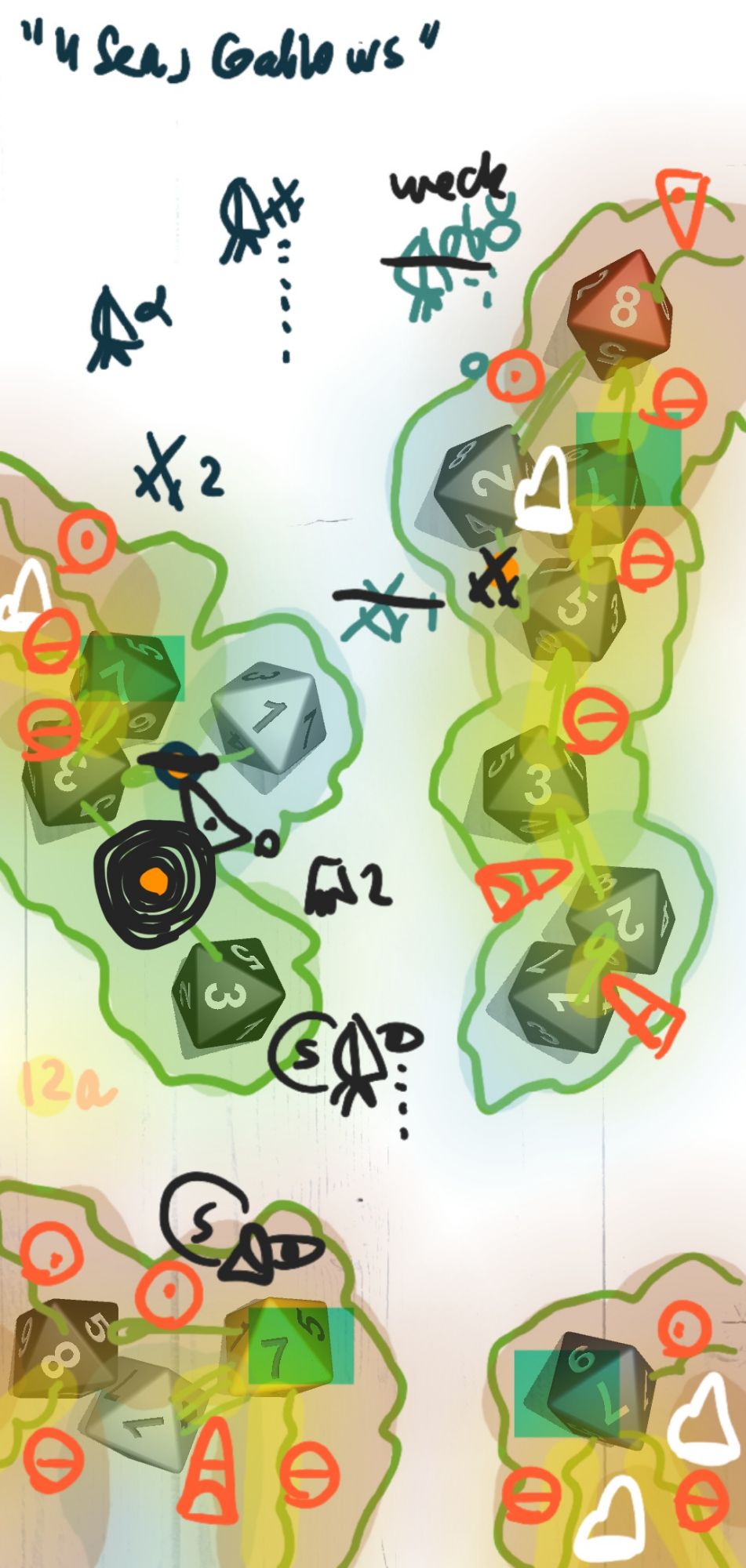
Although it rests at a temperate latitude, this region at the convergence of four seas is punishingly arid. Cold, still winters bring clay-cracking droughts that are timidly wetted by early spring rains.
Much of the area is uninhabitable, but not all. On the east-most point of the western peninsula rests the grand Silver City. Memories of ill-fated attempts at trade via the straights have hung a superstitious injunction of sorts over local commerce—not to mention the utter lack of partners with which to trade—, but the city has grown as a pearl around a grain of sand due to rich regional fisheries. A heaving, stinking pearl chaotically brimming with people and activity.
Some degree of this success may also be owed to long traditions of piracy. Abundant caves in the highlands that hem the straights are rumored to hold caches of goods and serve as lookouts for pirate bands. There is contention abroad as to whether the tribes of the eastern peninsula are descended from pirates, the ancestors of the pirates, or—the least current theory, for what could these foreigners possibly know—another culture entirely unrelated to the Silver City.
In its success, the Silver City has recently begun to explore and develop the rocky shores and desert lands that surround them, both with an expeditionary fleet to complement its primary maritime endeavors, and the recent establishment of a colony in the southwest. While none have yet found the sunken treasure spoken of in legend by storytellers back home, the promise of rich ores, hardy orchards, and land to settle in the cool of the mountains away from the crowded, sprawling city all provide their own more practical draw.
 Five and One Fifth Lights
Leave a comment